
You already know which pair you're reaching for tomorrow.
Not consciously. You're not standing at your drawer running a mental tournament bracket. But if someone asked you right now to rank your underwear from best to worst, you could do it without thinking.
Top pair. Second pair. The ones that are fine. The ones you only wear when the washing basket has won.
Every man has this hierarchy. Nobody set it up deliberately. It just formed, one wash day at a time, until the drawer organised itself into tiers you never named but navigate perfectly.
The Tiers
After nine years of selling underwear and talking to a few thousand men about what they're actually wearing, the same hierarchy shows up every time.
Tier One is the pair you reach for first after laundry day. The one that fits right, sits where it should, and doesn't need adjusting by mid-morning. You put it on and forget about it, which is the highest compliment underwear can receive.
Some men wear their best pair before job interviews or first dates. More men do this than would ever say so out loud.
Tier Two is the middle. These pairs are fine. Not remarkable. They do their job without complaints from either party. You don't reach for them first, but you don't avoid them either.
Tier Three is the laundry day pair. The one that only surfaces when literally everything else is in the wash. You know the pair. You've considered throwing it out at least three times, and you haven't. It's still there, folded or balled up in the back corner, waiting for its quarterly appearance.
Some blokes have a Tier Four. That's the pair in the drawer that doesn't even get worn on laundry day. Functionally retired but physically present. A ghost taking up drawer space because throwing it out feels like a decision, and not throwing it out doesn't.
Why the Bad Pairs Survive
The obvious move is to bin anything that's fallen to Tier Three. You know it's not good. You actively avoid it. A pair you only wear under duress has already told you everything you need to know.
But you keep it.
This isn't laziness. The psychology is specific. Losing something you own feels roughly twice as bad as gaining something equivalent feels good. Throwing out a pair of underwear, even a bad pair, registers as a loss. Keeping it costs nothing visible. So it stays.
And there's a compounding factor. The parts of your brain associated with physical pain activate when you try to part with possessions. Not things you bought last week. Things you've owned long enough that your brain has filed them as yours.
A pair of underwear you've worn for three years has been closer to your body than almost anything else you own. The attachment isn't sentimental in any real sense. But the neural response doesn't know that.

This is why men keep underwear for an absurd amount of time. One survey found men hold onto pairs for an average of seven years. Nearly half of Americans have owned the same underwear for over a year. A fifth have kept pairs beyond four years.
And 38% don't even know how old their oldest pair is. If you can't remember when you bought it, it's not because the pair is recent.
What the Ranking Is Actually Telling You
The pecking order isn't random, and it isn't static. Pairs move. Always in one direction.
When you first buy a pair, it enters the rotation at or near the top. New, soft, everything works. Over the next few months, it either holds its position or starts sliding. And nothing ever climbs back. No pair has ever gone from Tier Three to Tier One.
The demotion is permanent because it's driven by physical degradation, not mood.
The waistband loses its grip. The fabric pills. The inner-thigh area thins where friction is highest. The colour fades. None of this happens overnight, which is why the demotion feels gradual rather than decisive. But at some point you start reaching past it for the pair behind it. That's the moment it dropped a tier.
You didn't decide this. Your hands did.
Elastic fibres lose up to 26% of their tensile strength as they age. Heat accelerates this. Every hot wash and every high-heat tumble dry fractures the polymer chains that give your waistband its hold. Elastane also needs rest between wears to recover its shape. Wearing the same pair two days running doesn't give the fibres time to bounce back, and the stretch-out becomes permanent faster.
If a pair has slid from Tier One to Tier Three, the fabric has told you everything a lab test would. You don't need to measure tensile strength. You already ran the test by reaching past it three wash days in a row.
Older Pairs Aren't Just Less Comfortable
Your Tier Three pairs are also harder to get clean.
Even freshly laundered underwear contains roughly 10,000 living bacteria. That's after a full wash cycle. Degraded fabric makes this worse, because pilling and fibre breakdown create more surface area and more tiny crevices where bacteria survive the wash. Cold water washing, which is the right approach for preserving elastane, provides minimal disinfection on its own. You'd need temperatures above 60°C for meaningful pathogen reduction.
Your underwear is never truly sterile. And the older a pair gets, the further from clean it sits after each wash. This isn't a reason to panic. But it's another reason to stop treating worn-out underwear as "still fine."
How Many You Actually Own
Most advice says you should own 14 to 25 pairs. The high end is excessive. What actually works for most men is seven to ten good pairs in active rotation. Enough to get through a week with a spare or two.
The qualifier that matters is "good." Not seven pairs total, four of which are Tier Three holdovers occupying space while you cycle through the same three you actually like.
The average man owns 15 to 20 pairs. The real underwear drawer rotation is 8 to 10. The rest just exist. Surviving every periodic drawer clean-out because throwing them away feels like waste.
You tell yourself you might need them someday. The only scenario where you'd need them is one where you haven't done laundry for two weeks. And the fix for that problem is doing laundry, not hoarding bad underwear as insurance.
If you did a genuine count right now, not how many pairs are in the drawer but how many you'd freely choose to wear, the number would be smaller than you think. For most men it's three to five genuinely good pairs carrying the full underwear rotation while another ten sit there contributing nothing.
What a Drawer Without Tiers Looks Like
The best version of your underwear drawer is one where the pecking order disappears.
Not because you've stopped caring about comfort. Because every pair is close enough in quality that the ranking has nothing to sort. You reach in, grab whatever's on top, and get on with your morning.
This requires two things. Getting rid of everything below Tier Two, honestly. And replacing with pairs that don't slide down the ranks within six months.
The second part is where fabric choice decides everything. Cotton pills, thins, and roughens measurably after 20 washes. A cotton pair enters at Tier One and typically hits Tier Three within a year. That cycle is what keeps the pecking order alive.
You buy new pairs, they feel great, they degrade, they get demoted, you buy new ones to replace them. Your drawer is permanently a mix of newish good ones and aging bad ones.
MicroModal doesn't follow this trajectory. The fibres are longer and smoother, so they resist the pilling and surface degradation that drive demotion. A pair that enters at Tier One stays at Tier One. We have customers at four years on the same pairs, and those pairs haven't moved in the rotation because there's been no decline to trigger a move.

When every pair holds its position, the pecking order has nothing to sort. You stop making micro-decisions about which underwear deserves your Tuesday. You just get dressed.
The One-Pair Test
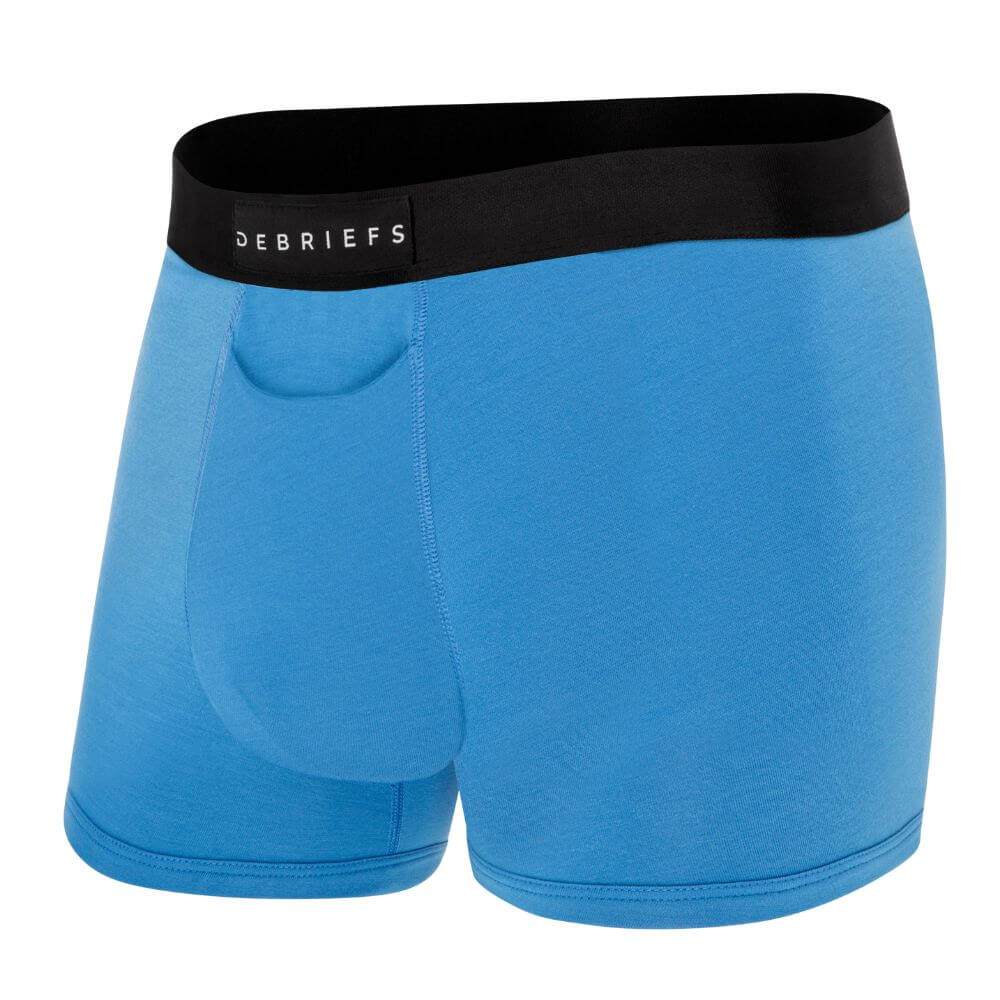
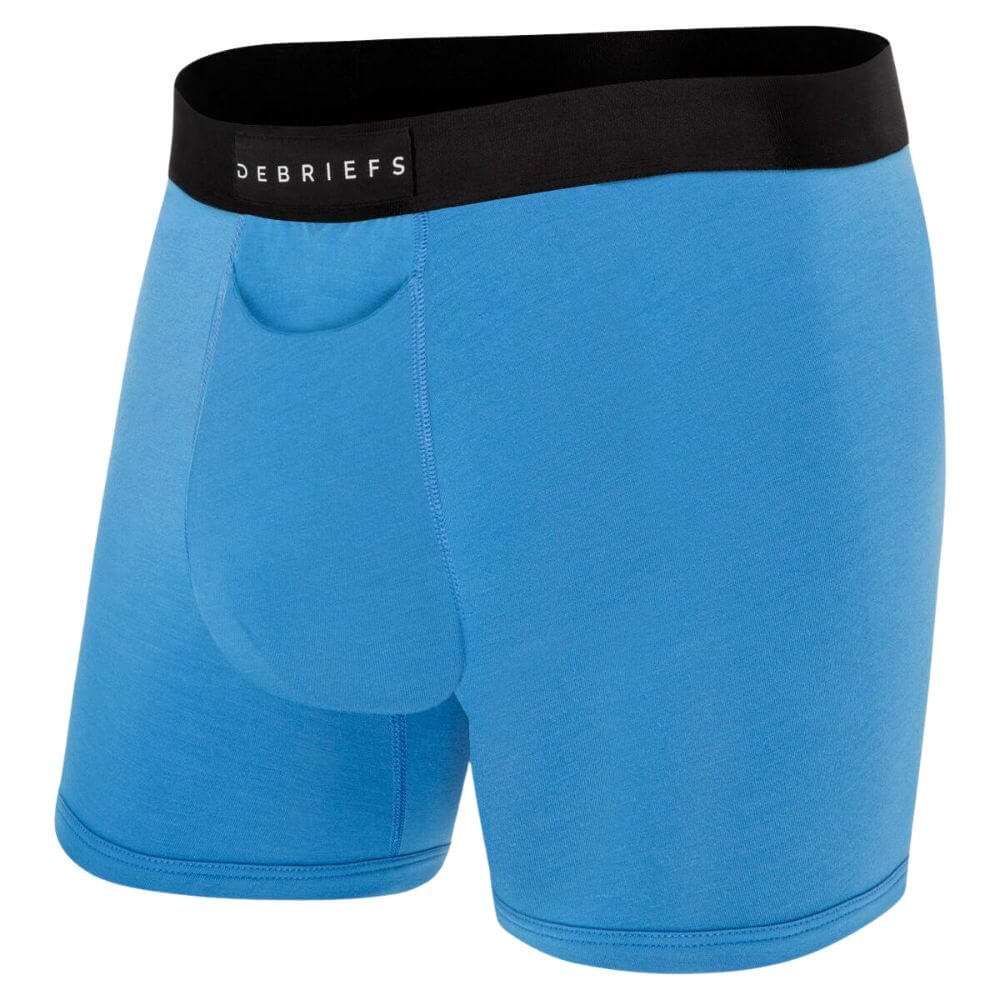
You don't need to overhaul your entire drawer. One pair of trunks or boxer briefs. Put it in the rotation. See where it lands in your pecking order after a week.
Then put on one of your Tier Three pairs the next day.
That contrast is the whole argument. Not something I can write in a blog post. Something you feel at 7am on a Wednesday, standing in front of your drawer, reaching for the same pair you reached for last time.
Your drawer already has the ranking. The only question is whether you're going to do anything about it.
Frequently Asked
- How many pairs of underwear should I actually own?
- Seven to ten good ones. Enough for a full week plus a spare or two. If half your drawer is backup you'd rather not wear, you don't own ten pairs. You own five pairs and five obligations.
- How often should I replace underwear?
- When it drops in your pecking order. If you're reaching past it, it's done. For cotton, that's typically 6 to 12 months of regular rotation. For MicroModal, we've seen pairs last three to four years without sliding.
- Why can't I bring myself to throw out old pairs?
- Your brain treats losing possessions, even bad ones, as a genuine loss. It's not rational, but it's normal. If binning them feels like too much, put them in a bag under the sink for a month. If you never go looking, they were already gone.
- Should I rotate pairs to make them last longer?
- Yes. Elastic fibres need rest between wears to recover shape. Wearing the same pair two days in a row accelerates stretch-out. An underwear drawer rotation of seven pairs gives each one a full week of rest, which meaningfully extends its life.
- Is the pecking order real or am I just grabbing whatever's on top?
- Fold your underwear. Stack them evenly. See if you still reach for the same pair first. You will.