
Someone on Reddit described the mesh lining in swim shorts as "sitting on a damn cheese grater." The post got 77 upvotes and 63 comments. Not a controversial take.
You're not the first bloke to reach into a pair of new swim trunks, feel that scratchy netting against your thighs, and think this can't be right. It is intentional. It's also been rubbish for decades, and the fact that it's still the default in most swim shorts is one of those retail mysteries that nobody has a satisfying answer for.
The longer answer is worth knowing. There's one thing mesh liners actually do well, one thing you need to replace before you grab the scissors, and a real difference between swim shorts done properly and swim shorts still running on a design nobody bothered to question.
Why Swim Shorts Come With a Mesh Lining
The liner wasn't designed by someone who hated you. There's a genuine problem it was trying to solve.
Before built-in liners became standard, men wore swim shorts over regular underwear. Cotton, mainly. Cotton absorbs water like a sponge. It gets heavy, slow to dry, clingy, and provides basically no support once it's soaked. Nylon mesh, by contrast, dries fast and weighs almost nothing. The idea was to build a quick-dry barrier directly into the shorts so men didn't need to wear anything underneath. One layer. Faster drying. Coverage sorted.
That logic made sense at the time. Nylon mesh does dry faster than cotton. It provides some modesty when the outer fabric is wet. And on paper, a built-in barrier between skin and the outer shell should reduce friction.
The problem is that mesh is not soft fabric. Mesh is an open weave. It is, structurally, holes.
Why the Mesh Lining Fails
It causes the chafing it was supposed to prevent
The core argument for a mesh liner is anti-chafe protection. A layer between your skin and the outer fabric of the shorts should reduce irritation.
But mesh isn't a smooth surface. An open weave creates raised fibres at every junction in the netting, and those junctions press rough, irregular edges against the skin. When mesh is wet and moving against your thighs, it doesn't glide. It drags. The Cleveland Clinic's guidance on chafing is direct on this: smooth, moisture-wicking fabrics reduce skin friction; rough or abrasive materials increase it. Mesh fails that test structurally. You cannot have an open weave and a smooth surface at the same time.
And then there's sand. At any beach with actual sand, grit works its way into the mesh holes and embeds in the weave. It doesn't wash back out in the ocean. It stays there. You're now walking around with a liner full of sand pressed against the inside of your thighs for the rest of the afternoon. The anti-chafe argument doesn't just fail. It inverts.

The drying claim holds, but the comparison is wrong
Mesh does dry faster than cotton underwear. This is true, and it was the right comparison to make in the 1980s.
But the relevant comparison now isn't "mesh versus cotton." Modern compression liners and boxer brief style liners, made from smooth polyester-elastane blends, dry just as fast as mesh. Often faster. And they do it without the structural problems. Against current materials, mesh has no drying advantage. The argument is a relic of a different era.
Coverage is real, and it's the one argument that holds up
Here's where mesh defenders actually have a point.
Swim shorts made from lightweight or light-coloured outer fabric can become see-through when wet. A liner underneath prevents that. This is a legitimate function, and it's why you can't just remove the mesh and do nothing, particularly if the outer fabric of your shorts is thin.
But coverage is a job any liner can do. You don't need mesh specifically for it. A smooth compression liner, or a pair of boxer briefs worn underneath, solves the same problem without the abrasion. The argument for mesh isn't that it's uniquely good at providing coverage. It's that it's the thing already sewn in.
Should You Cut the Mesh Out?
Yes, if you're going to wear something underneath.
Before cutting, check the outer fabric. Hold the shorts up against a light source or try them wet. If the outer fabric is opaque enough that modesty isn't a concern, remove the mesh and don't replace it. If it's thin or light-coloured, remove the mesh and put something better in its place.
The cutting process is straightforward. The mesh is typically attached along the waistband seam and sometimes stitched at the inner leg seam as well. Use sharp scissors and work carefully along those attachment points rather than pulling at the mesh, which can stretch or distort the outer shell. Remove it in sections. Once done, check the waistband area for rough remnants of the attachment stitching and trim those flat. The whole thing takes about five minutes, and most men who do it say they should have done it the first day.
What you gain:
- No more abrasive netting dragging against your skin every time you come out of the water
- No embedded sand
- No drag during movement
What you lose:
- Coverage, if the outer fabric needs it
- Marginal containment
Mesh doesn't provide meaningful structural support, but it does keep things loosely in place. Whatever you replace it with will do both jobs better.
What to Wear Instead
Buy swim shorts with a proper liner built in
The real fix for the mesh liner problem isn't cutting mesh out of existing shorts. It's not buying shorts with mesh in the first place.
The market has caught up. There are now swim shorts with built-in liners made from smooth synthetic blends, shaped like compression shorts or boxer briefs, stitched directly into the outer shell. They sit flat against the skin, move with the body, provide actual support, dry just as fast as mesh, and trap no sand. The difference between wearing one and wearing mesh isn't subtle.
When buying new swim shorts, look specifically for "compression liner" or "boxer brief liner" in the product description. Avoid any shorts described only as "mesh lined." That distinction is worth more than any brand name on the tag.
Wear boxer briefs underneath
For shorts you've already removed the mesh from, or for genuinely unlined swim shorts, the practical option is to wear boxer briefs underneath. This is more comfortable than any mesh liner ever managed, as long as you choose the right fabric.
What not to wear: cotton. Cotton absorbs water, gets heavy, and takes most of a day to dry. That's the problem you started with.
What works: fabric that wicks moisture, dries faster than cotton, and has a smooth surface with no rough edges against wet skin. Lenzing's fibre data on MicroModal describes the mechanism: the fibre structure allows absorption and release of moisture, maintaining a drier microclimate against the skin. In practice, MicroModal dries considerably faster than cotton and stays more comfortable during and after water exposure.

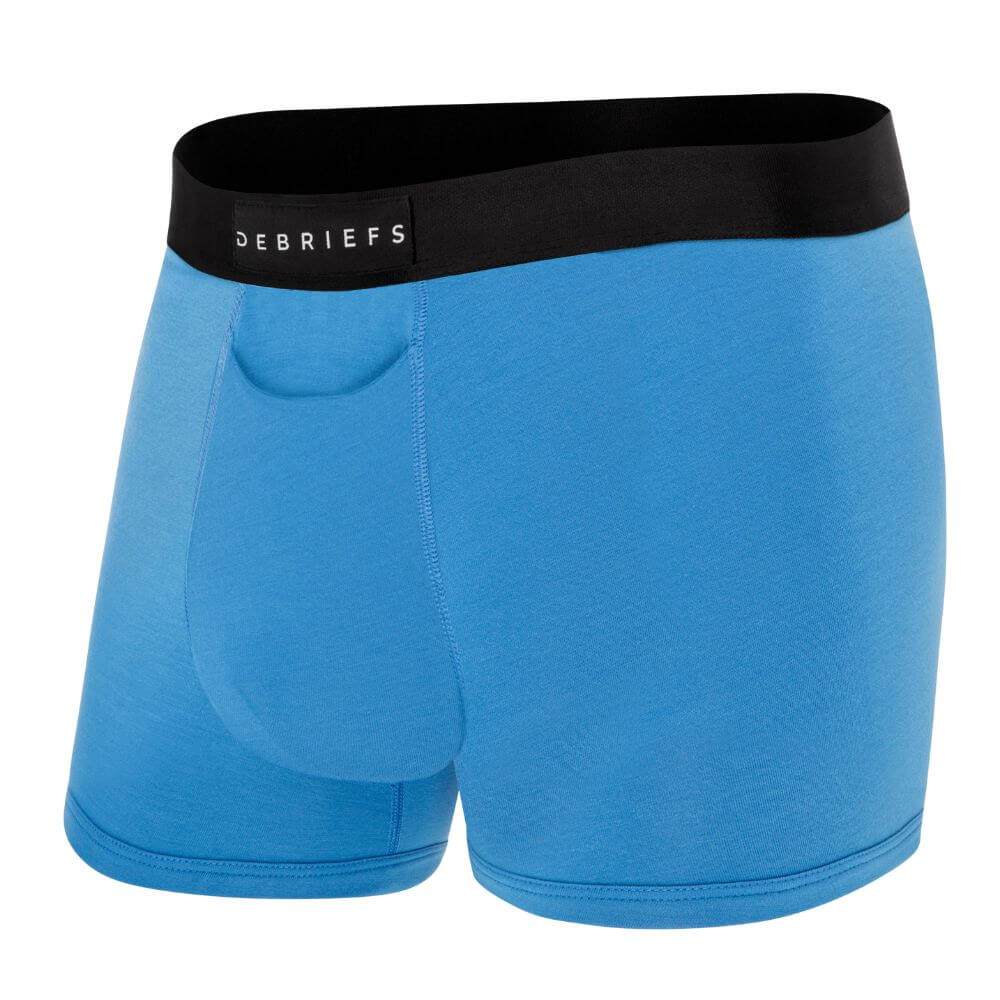
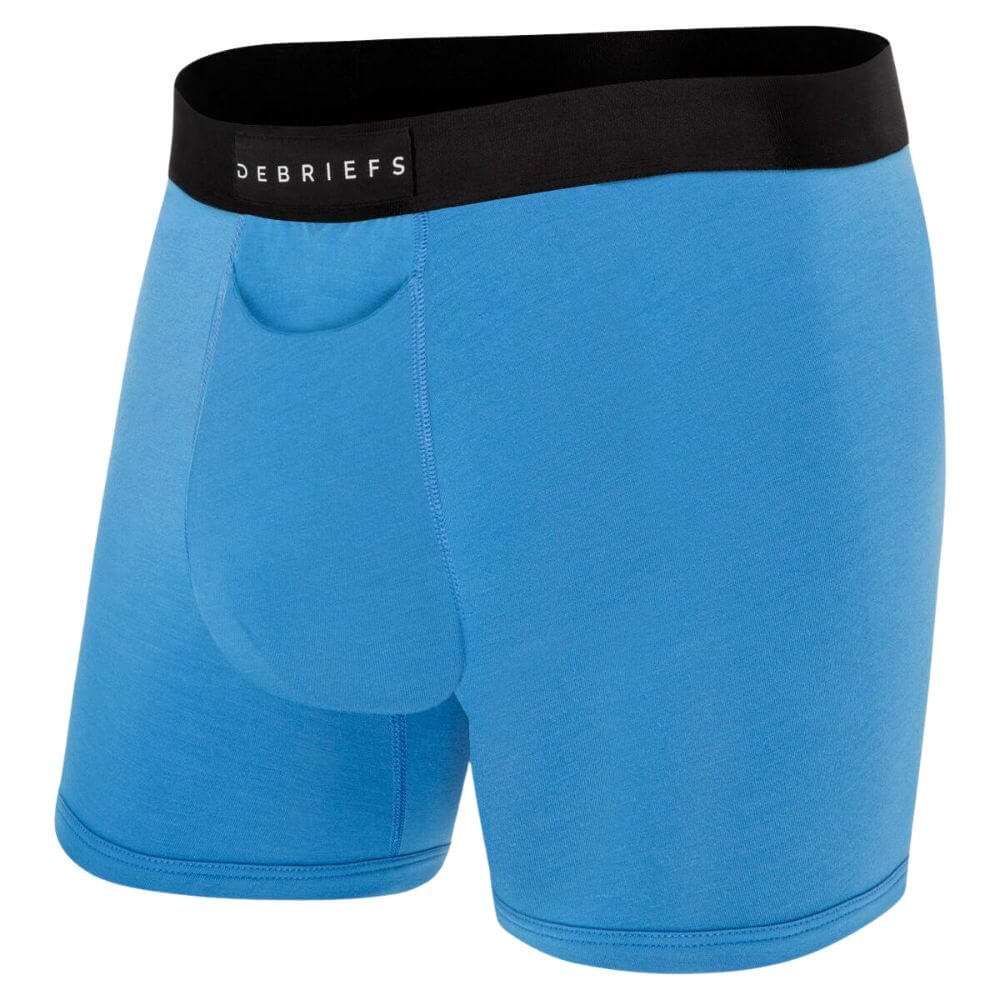
Debriefs boxer briefs are made from MicroModal and built with flatlock stitching throughout. No raised seams, no tags, nothing to create friction against wet skin. They're not a dedicated swim product, and if you're doing open water swimming for hours a performance synthetic will technically dry faster. But for a beach afternoon or a couple of hours at the pool, they do the job better than any mesh liner, without the cheese grater problem.
The boxer briefs explained guide covers inseam length and thigh fit in detail, which is directly relevant to what you want from any liner under swim shorts.
Wearing nothing underneath
Some swim shorts, particularly those with longer inseams and heavier outer fabric, were designed to be worn without any liner. Board shorts originally worked this way. If you remove the mesh from that style and find the outer fabric doesn't cling or irritate when wet, you may not need anything under it at all.
Test it before committing to a full day at the beach.
What to Look For When Buying New Swim Shorts
If you're shopping and want to avoid this problem entirely:
- Liner type. "Compression liner" or "boxer brief liner" means smooth synthetic, close-fitting, good. "Mesh lined" or "mesh netting" means the old standard you're trying to avoid.
- Liner fabric. Should be a polyester-elastane blend. Smooth, close-knit, no open weave.
- Seam construction in the liner. Flatlock or bonded seams mean no raised edges against skin. Overlocked seams are rougher.
- Outer inseam length. A longer inseam, 6 to 8 inches, covers more of the inner thigh where most swim-related chafing happens.
For a deeper breakdown of what fabric properties actually mean for anything worn against the skin, the top 5 breathable men's underwear fabrics guide is worth reading before you shop. And for anyone thinking about underwear in active or high-movement contexts, the Athletic Underwear 101 breakdown covers what separates a fabric that works from one that doesn't when movement and moisture combine.
The mesh liner had its time. That time has passed.
- Mesh liners fail structurally. An open weave cannot be smooth, and the holes trap sand.
- Coverage is the only argument that holds up, and any smooth liner does it better.
- Cut the mesh out, then either buy shorts with a compression or boxer brief liner, or wear non-cotton boxer briefs underneath.
FAQ
- Should you cut the mesh lining out of swim shorts?
- Yes, if your shorts only have a standard nylon mesh liner and you're going to wear something underneath. The open weave creates rough, raised edges that drag against wet skin, trap sand in the holes, and produce the very irritation they were supposed to prevent. Remove the mesh and replace it with either swim shorts that have a proper compression or boxer brief liner built in, or boxer briefs worn underneath. If the outer fabric is thin, you need something underneath for coverage before you cut.
- Why is the mesh lining in swim shorts uncomfortable?
- The discomfort is structural. Mesh is an open weave, not smooth fabric. The fibres form raised junctions at every intersection in the netting, and those junctions create rough edges against the skin. When wet mesh moves against your thighs during activity, it drags rather than glides. Sand and grit from the beach embed in the holes and don't wash out. Mesh is breathable because of the open holes. Those same holes are what make it abrasive against skin.
- What is a boxer brief liner in swim shorts?
- A boxer brief liner is a smooth inner layer sewn into swim shorts, shaped like a pair of boxer briefs rather than open netting. It's typically a polyester-elastane blend that fits close to the body, provides actual support, doesn't trap debris, and dries just as fast as mesh. Several swim short brands now offer this as standard. It does everything mesh was supposed to do, without the drawbacks.
- Can you wear boxer briefs under swim shorts instead of a liner?
- Yes, and for most beach or poolside use it works well. Avoid cotton boxer briefs, which absorb water and stay wet. Moisture-wicking fabrics, including MicroModal, dry faster than cotton, manage moisture against the skin, and have smooth surfaces that won't chafe. For casual beach use this works well. If you're doing extended water activity, a dedicated quick-dry synthetic liner will dry slightly faster, but for most purposes good boxer briefs are a comfortable and functional replacement for anything made of mesh.
- How do you remove the mesh lining from swim shorts?
- Use sharp scissors and work carefully. The mesh is attached along the waistband seam and usually stitched down the inner leg seam as well. Cut along the stitching rather than pulling the mesh out, which risks stretching or damaging the outer shell. Remove it in sections. Once done, trim any rough remnants of the attachment thread from the waistband area. Five minutes.