
Ask a man what matters most when buying underwear and he’ll tell you comfort. Material quality. Fit. Performance.
Then he’ll buy the exact same black cotton pair he’s been buying since he was 23.
I’ve shipped a few hundred thousand pairs of underwear and read a few thousand customer emails. And the single strangest thing about this business is the gap between what men say and what they actually do. Not lying, exactly. More like answering a question they’ve never genuinely asked themselves.
What Men Say When You Ask Them
In a 2024 study of 752 men, 69.6% said material composition was the most important factor when choosing underwear. Style and design came in at 65.6%. Interest in brand name was significantly lower, just 22.6%.
Comfort consistently ranks as the top stated priority across every survey I’ve seen. Material. Fit. Whether it rides up or chafes. These are the things men claim to optimise for when they buy underwear.
Over 75% of men say they’d pay more for underwear engineered to keep them dry and cool during physical activity. Three-quarters. That’s not a niche. That’s an overwhelming stated demand for performance fabrics.
So you’d expect buying habits to reflect that.
What Men Actually Buy
Black underwear is the most purchased colour globally. In a survey of 45,000 people, black came in at 20%, followed by blue at 19%, red at 16%, and white at 13%. Not even close.
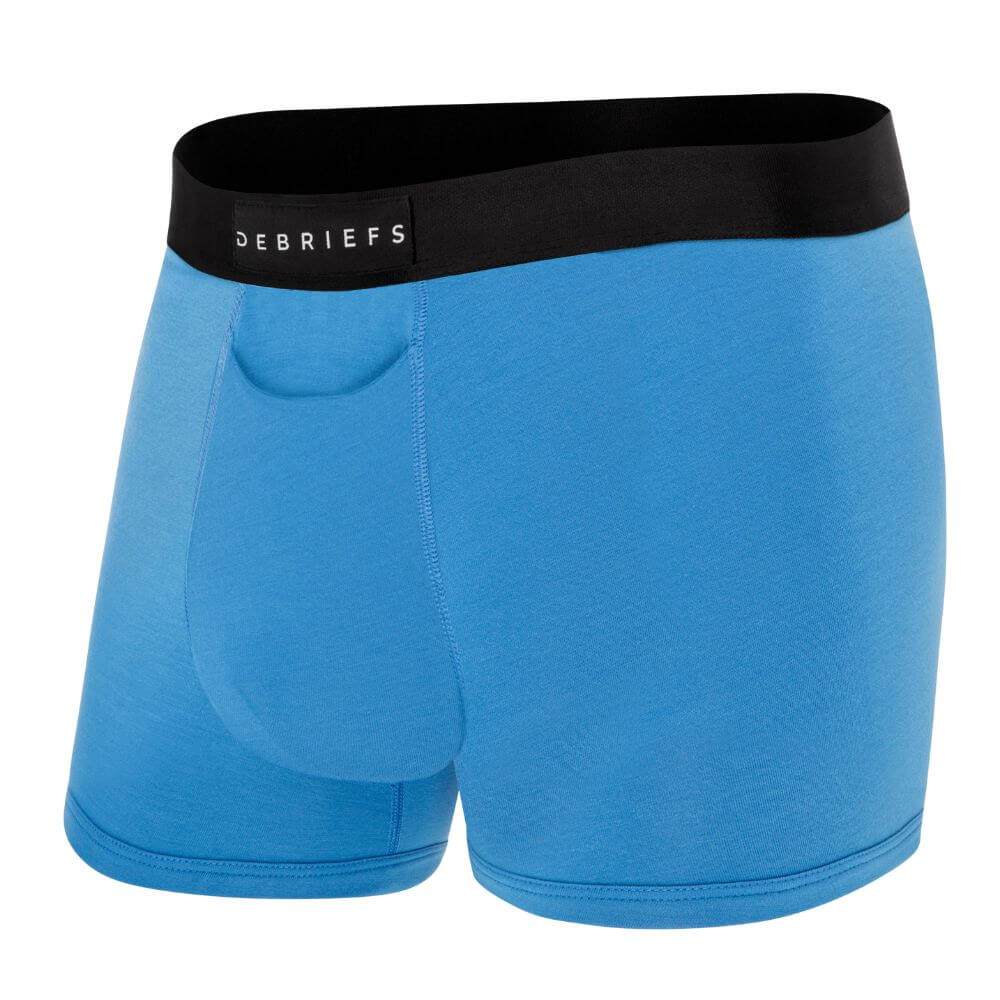
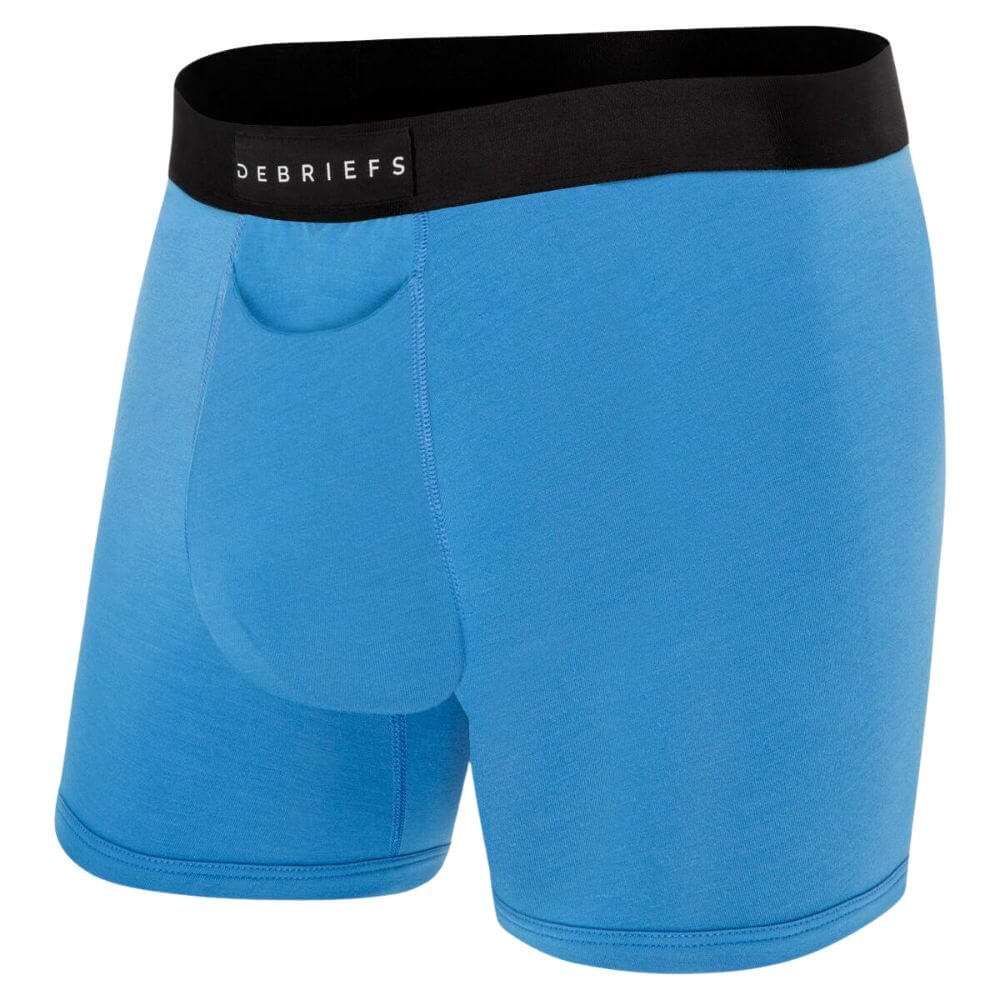
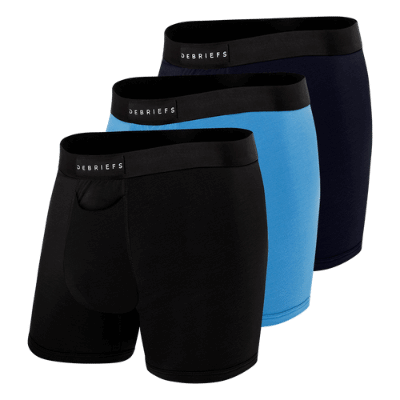
At Debriefs, black is the clear top seller. Colour exploration increases with loyalty. Repeat customers eventually try everything in the range. But that first purchase? Almost always black.
Cotton held 68.6% of the men’s underwear market in 2022. Not modal. Not bamboo. Not the performance fabrics three-quarters of men claim they’d pay extra for. Plain cotton. The same stuff men have been wearing for decades, despite absorbing moisture poorly, degrading quickly, and doing exactly none of the things men say they want underwear to do.
The stated demand for performance doesn’t match the market at all. It’s not even in the same postcode.
The Say/Do Gap
There’s a name for this: the say/do gap. Stated preferences diverge from actual behaviour, usually without anyone noticing. You think you’re choosing based on comfort and performance. You’re actually choosing based on colour and habit.
The gap isn’t unique to underwear. It shows up everywhere. The Sony Walkman tested poorly in focus groups. Same with Red Bull and the Dyson vacuum. People said they wouldn’t buy them, then bought them in droves. Or the reverse: products that survey beautifully and fail in market. What people say they want and what they actually choose are different questions with different answers.
Underwear is just a near-perfect example of the gap because the category sits so far below conscious decision-making.
In one choice blindness study, researchers secretly swapped people’s product selections after they’d made a choice. Jam flavours. Tea fragrances. Laptop features. No more than a third of participants detected the manipulation. For dramatically different options, like cinnamon-apple jam versus grapefruit, fewer than half noticed. And the people who didn’t notice? They happily explained why they “chose” the option they’d been handed.
We don’t know our own preferences as well as we think we do.
Why Men Buy the Same Underwear for Years
A partner buys them a pair. Their mum replaces the ratty ones. They grab whatever’s on sale at a department store during the narrow window when they’re single and actually responsible for their own drawer.
Then they never change.
The reasons are well-documented. Status quo bias. Loss aversion. The fact that switching brands means giving up the known, and the disutility of giving something up is greater than the utility of acquiring the new thing. Even when the current state is mediocre and the transition cost is trivial, people stick.
There’s the “golden halo” effect too. Setting something as the default doesn’t just benefit from inertia. It subtly boosts the perceived value of the default itself. Your current brand isn’t just convenient. You genuinely think it’s better than it is, because you’ve been wearing it long enough that it feels like a choice you made rather than a choice you inherited.
Research suggests marketers need to present three times the value of what consumers currently receive to make them switch. Not 10% better. Not 50% better. Three times. And that’s assuming the consumer is even paying attention, which in a category like underwear they almost never are.
Men don’t research underwear. The idea itself feels vaguely embarrassing to some, like admitting you’ve got too much time on your hands. In the same study, 51.6% of single men knew only one to three types of underwear. Another 12.3% had “no idea” what categories even existed. Cohabiting men did better, 40.8% knew four to six types, presumably because living with someone educates you about options. But the baseline is staggering ignorance in a product category men use every single day.
Alan Greenspan used men’s underwear sales as a recession indicator. When the economy contracts, underwear is the first thing men stop buying. Not because it’s unnecessary. Because it’s invisible. Nobody sees it.
The social pressure that forces men to replace a stained shirt or worn-out shoes doesn’t exist for underwear.
You can wear cheap, bad underwear for years and the world will never know.
What I’ve Learned Selling Underwear
Most customers buy once and leave. A smaller group comes back, and the ones who come back are worth significantly more over time. That split is common in DTC, but in underwear it’s sharper than most categories because men don’t think about the product enough to evaluate it properly.
The difference isn’t demographics. It’s not income or age or geography. It’s depth of experience with the product.
First-time buyers who leave tend to use complaint language. “Rides up.” “Chafing.” Short, reactive descriptions of the problem that pushed them to try something new. They’re describing relief, not evaluation.
Repeat buyers use assessment language. “Hold up well over time.” “Still going strong.” They’re evaluating durability, consistency, long-term value. Same product. Completely different relationship to it.
The biggest factor in whether someone comes back is how many pairs they buy on first order. Men who “just try one” seldom return, regardless of product quality. Men who commit to replacing their drawer upfront almost always stay. I don’t think it’s the money. I think it’s the mental shift. Buying one pair is a test. Buying seven is a decision. Tests require evaluation. Decisions require use. And you can’t evaluate underwear quality in a fortnight. You need months. Washes. The waistband holding or not holding. The fabric staying soft or turning rough. One-pair buyers leave before they’ve experienced any of that.

One of the most common ways someone tries Debriefs for the first time? A partner bought it for them. Not their own research. Not a recommendation from a mate. Someone else removed the activation energy entirely, and once the comparison was physical rather than intellectual, the switch was instant.
The Black Pair
Colour dominates the purchase decision more than men admit. Black sells because it’s safe. Doesn’t show stains. Goes with everything, though I’m not sure what “going with everything” means for a garment nobody sees. It’s the default. The option that requires no thought.
We offer other colours. They sell, but not to first-time buyers. Colour exploration happens after trust is established. The buyer has to know the product works before they’ll risk deviating from black.
This makes sense if you think underwear is a low-involvement purchase. You’re not optimising. You’re just trying not to make a mistake. And black can’t be a mistake. It’s what everyone buys. That’s the whole appeal.
But it also means men are choosing based on the least important attribute of the product. The colour affects nothing. Comfort. Durability. Moisture-wicking. Odour resistance. None of those correlate with whether the fabric is black or blue. Yet colour is doing more to determine the purchase than material composition, despite material composition being the thing 69.6% of men claim matters most.
The Comfort Paradox
Men say comfort is the top priority. But comfort is invisible until it’s gone. You don’t notice good underwear. You notice bad underwear. The pair that rides up by mid-morning. The waistband that digs in. The fabric that chafes on a long walk.
If you asked a man to rank his current underwear on comfort, he’d probably say it’s fine. Not because it’s objectively comfortable. Because he’s not in active discomfort at the exact moment you asked. That’s a very low bar. But it’s the bar most men are using when they decide not to switch.
I’ve had customers describe their old underwear in terms you’d use to lodge a complaint. Rides up constantly. Waistband rolls. Gets scratchy after a few washes. And when you ask why they didn’t replace it sooner, there’s this pause. Because the question itself feels strange. It’s just underwear. It does the job. Good enough isn’t the same as good, but good enough persists for years because the category sits permanently below the action threshold.
The moment that changes isn’t when someone reads a better spec sheet. It’s when someone physically experiences the difference. You can think about better underwear for months and do nothing. You can’t feel it for a day and go back. That’s why the hidden costs of cheap underwear aren’t financial. They’re the accumulated discomfort you’ve stopped noticing because it’s been there so long it feels normal.
Why This Matters
You can’t just tell people the product is better and expect them to switch. The gap isn’t knowledge. It’s activation energy.
Most men already know their underwear isn’t great. They adjust it five times before lunch. They avoid certain pants because the underwear bunches. They’ve been meaning to try something better for years. The information is there. The intent is there. What’s missing is the forcing function.
For Debriefs, that’s usually a partner. Someone who sees the ratty drawer and takes action. Or it’s a day bad enough that the cost of continuing outweighs the inertia of switching. Chafing bad enough to Google remedies from a work bathroom. Waistband failure at an inopportune moment. A not-so-subtle adjustment mid-presentation.
The stated preferences, comfort and performance and material quality, those aren’t lies. They’re real. But they only activate after the default has been broken. Once someone switches, they evaluate properly. They notice waistband grip and fabric softness and whether it holds shape after 30 washes. But before the switch, they’re not evaluating at all. They’re just repeating.
What Actually Changes Behaviour
You don’t need better marketing. You need to break the loop.
One way is to make the current state painful enough to force action. That’s not in your control. The other way is to remove the decision entirely. Gift it. Subscription box it. Make trying the new thing require less effort than continuing with the old thing.
We’ve seen this ourselves. When someone receives Debriefs as a gift, the conversion to repeat customer tends to be stronger than when they sought us out themselves. Same product. Same price. Different activation path. The gift removes the perceived risk. There’s no loss if it doesn’t work out because you didn’t choose it in the first place.
The other mechanism is making the first purchase feel like a decision rather than a test. That’s where the quantity effect comes in. Buying seven pairs forces a mental commitment that buying one doesn’t. You’ve already switched. Now you just need to confirm it was the right call. That confirmation bias works in your favour rather than against it.
None of this shows up in surveys. Men will tell you they care about material composition and performance and fit. And they do. Just not enough to act on it until something breaks the default.
That’s the gap.
Frequently Asked Questions
- Do men actually care about underwear?
- Yes, but only after they’ve experienced genuinely good underwear. Before that, they care in theory. After, they notice every time they put the old pairs back on. Comfort is invisible until you’ve felt the contrast.
- Why do men wear the same brand for years?
- Status quo bias. Loss aversion. The fact that switching feels like giving something up, even when the thing you’re giving up is mediocre. And because the default isn’t just convenient, it’s subtly perceived as better than it is simply by being the default.
- Who actually buys men’s underwear?
- In relationships, partners buy underwear about 30% of the time regularly and another 42% occasionally. Single men buy their own, but often default to whatever their mum bought them in their late teens. The purchasing pattern is: mum until early twenties, self for a brief window, then partner.
- What’s the most popular underwear colour for men?
- Black, by a significant margin. In a 45,000-person survey, 20% chose black, with blue at 19%, red at 16%, and white at 13%. Most underwear brands report the same pattern, and it’s no different at Debriefs across both trunks and boxer briefs. Colour exploration happens later, once the buyer trusts the product.
- Is expensive underwear worth it?
- Depends whether you’re testing or switching. One pair isn’t enough to evaluate long-term comfort and durability. You need months of wear and washing to assess whether waistband holds, fabric stays soft, and the product performs under real conditions. If you commit, yes. If you’re hedging, you’ll leave before you’ve experienced the difference. The price per wear calculation only works if you actually wear them long enough to see the durability pay off.
- How often should men replace underwear?
- When it stops working. Waistband sag. Fabric thinning. Pilling. Elasticity loss. If you’re keeping pairs because everything else is in the wash, those aren’t backup pairs, they’re reminders your drawer needs sorting. Better underwear lasts years, but only if it’s actually better. Cotton degrades faster than performance fabrics regardless of how carefully you wash it.