
TENCEL started as the competition.
The brand you see on fashion swing tags and activewear labels everywhere right now was commercialised in 1992 by a British company called Courtaulds. Not by Lenzing. Lenzing, the Austrian company behind the fibres in Debriefs underwear, was racing Courtaulds to develop the same fibre process from the other side of Europe. They were rivals for most of that decade.
By 2004, Lenzing had bought the brand. The competition had become the acquisition.
So when someone asks about Lenzing vs TENCEL, the honest answer takes a sentence or two. Lenzing is the Austrian company. TENCEL is a brand name Lenzing uses for its lyocell and modal fabrics. But not every Lenzing fibre carries the TENCEL mark. And that gap is exactly why the label inside your Debriefs says LENZING MicroModal instead of TENCEL.
The Company Behind Both Names
Lenzing AG is an Austrian industrial business founded in 1938. Their whole operation is converting plant cellulose into textile fibre. Beechwood becomes modal. Eucalyptus becomes lyocell. Both get spun into fibres that mills use to make clothing.
For most of that history, Lenzing was invisible to consumers.
The mills knew the name. The people buying finished shirts and underwear didn't. A garment could be made entirely from Lenzing fibre and the label would just say "viscose" or "modal" and stop there.
That changed in 2018. Lenzing relaunched TENCEL as its flagship consumer-facing textile brand, pulling its specialty fibre range under one name. The stated aim was to shift from a fibre supplier known only to industry, to a consumer-recognised ingredient brand. Think of how a chip manufacturer gets its name onto a laptop sticker. Same logic: get consumers asking for TENCEL on a garment label the way they ask for a specific material in a jacket.
The TENCEL brand now covers lyocell, modal, and related fibre grades across sub-ranges including TENCEL Active, Denim, Home, and Luxe.
A Competitor Brand That Lenzing Bought and Held for Fourteen Years
The TENCEL name has existed since 1992. Lenzing has only owned it since 2004. And Lenzing didn't market it as a consumer brand until 2018. That three-part timeline is why the naming feels inconsistent to anyone who's tried to research it.
Lyocell, the fibre process that became TENCEL Lyocell, was developed in North Carolina in the 1970s. Courtaulds and Lenzing were both racing to commercialise it through the late 1980s and 1990s. Courtaulds launched TENCEL commercially in 1992 from a plant in Mobile, Alabama. Their brand, their trademark. Lenzing opened its own first commercial lyocell plant in Austria in 1997, five years after the rival brand had been in production.
Courtaulds was acquired by Akzo Nobel in 1998. The TENCEL business passed through a corporate spin-off, then to private equity, before Lenzing completed the acquisition in May 2004, taking over the factories in Alabama and Grimsby and the brand they'd spent the previous decade competing against.
Then Lenzing held the TENCEL name for another fourteen years before making it the centrepiece of a consumer brand strategy.
That history explains most of the Lenzing vs TENCEL confusion. TENCEL as a word has been in circulation since 1992. Lenzing as the owner has only been true since 2004. And the consumer-facing TENCEL brand only launched in 2018. Before that, even people who followed the fibre industry closely were more likely to encounter Lenzing's fibres labelled as "Lenzing Modal" or "Lenzing Lyocell" on trade documentation.
MicroModal Sits Outside the TENCEL Family
Here is the specific thing that matters for understanding your Debriefs label.
MicroModal is Lenzing's finest grade of modal fibre, spun from certified beechwood at around half the diameter of cotton. It is not a TENCEL product. It is a LENZING product. Lenzing's own trademark and licensing documentation lists LENZING™ MicroModal as a distinct branded fibre, alongside the TENCEL™ trademarks but not under them. When the 2018 rebrand moved most of Lenzing's specialty textile fibres into the TENCEL family, MicroModal stayed where it was, carrying the LENZING name.
The fibre itself is a finer, higher-grade version of modal. MicroModal fibres measure around 0.9 dtex. Cotton fibres sit at 1.5 to 2.0 dtex. Roughly half the diameter. That's not a marginal difference on skin. Finer fibres mean a denser, smoother fabric surface, more drape, less friction. For something worn all day in contact with your most sensitive skin, the fineness of the fibre is most of the story.
TENCEL Modal is an excellent fibre. MicroModal is finer. And the fact that it carries LENZING branding rather than TENCEL is simply an artefact of how Lenzing organised its portfolio, not a signal of lower quality or a different manufacturer. Both are produced by Lenzing AG in Austria, from certified beechwood, under the same supply chain rigour. Different grade, different brand name.
The key point is that "LENZING" on a tag is not a consolation prize. It's the specific brand Lenzing uses for its finest modal fibre. A Debriefs label that says LENZING MicroModal is not saying "we couldn't get TENCEL." It's saying the opposite.
What Modal Alone Tells You
Not much.
"Modal" is a generic fibre category defined by international standards bodies. The definition involves high wet-modulus properties in regenerated cellulose, and any manufacturer can label a fibre "modal" if it meets that minimum specification. There is no origin requirement, no quality floor above the technical minimum, no certification.
One pair might contain LENZING MicroModal, certified, traced, licensed through Lenzing's own portal. Another might contain generic viscose-grade fibres from a mill with no connection to Lenzing whatsoever, that just clear the classification. Both are legally "modal." The fabrics are not in the same category.
This is the practical line when you're comparing underwear. A label that says "contains modal" or "soft modal blend" tells you very little. A label that says TENCEL™ or LENZING™ MicroModal tells you the fibre has been through Lenzing's certification process, that the source mill submitted fabric samples, that the provenance is verified through a licensing cycle with renewal every two years.
That certification infrastructure exists precisely because the generic alternative offers none of it. Lenzing runs an active enforcement programme against counterfeit claims because the branded names carry real market value, and that value needs protecting. Generic "modal" has no such enforcement. Anyone can print it.
Reading a Fabric Tag
Three things you might see, and what each one tells you.
- TENCEL™ means Lenzing-licensed lyocell or modal. Specific fibre, certified chain of custody, Lenzing-produced. It's the consumer-facing brand Lenzing uses for lyocell and for modal in most apparel and homewares applications.
- LENZING™ MicroModal means the finer-grade Lenzing modal fibre. Same supply chain rigour, separate brand family, finer fibres. This is what you'll find on the label inside your Debriefs. It's a different, and in many applications finer, Lenzing fibre.
- Modal on its own means the fibre meets a minimum international classification. Source, process, quality level, and origin are all unknown.
A significant amount of underwear sold as "luxuriously soft" or "silky modal blend" falls into that third category. And branded Lenzing fibres show at least 50% lower carbon and water impact than generic equivalents on the Higg Materials Sustainability Index. That gap exists because Lenzing's closed-loop manufacturing and the independent verification behind it are not replicated in generic modal production. Lenzing has placed first in Canopy's global annual Hot Button ranking for fibre producers for eight consecutive years.
The full comparison of modal versus cotton and bamboo covers how the fabric categories perform differently over time. But the first filter is just reading the tag.
Does the Brand Name Matter When You're Buying
For most applications, TENCEL Modal and LENZING MicroModal are both genuinely good fabrics. The meaningful choice is between any branded Lenzing fibre and unbranded generic modal, not between the two Lenzing names.

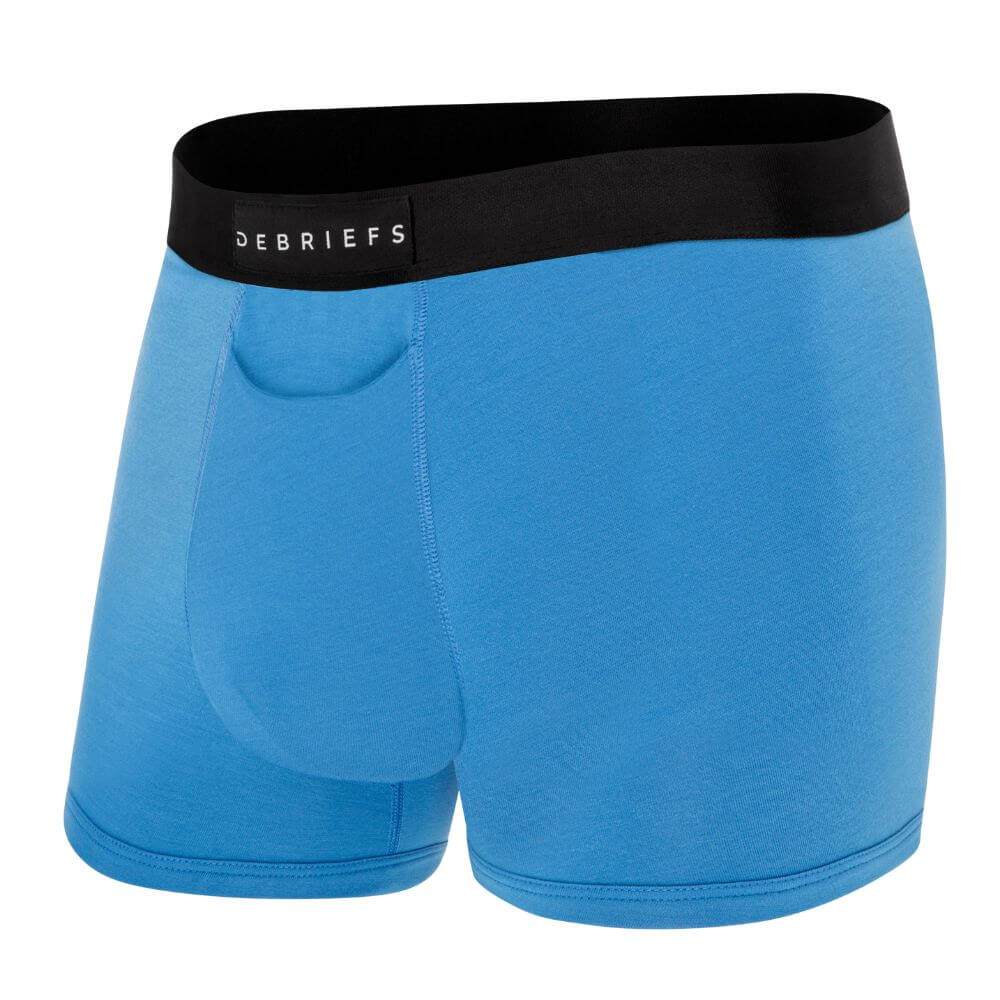
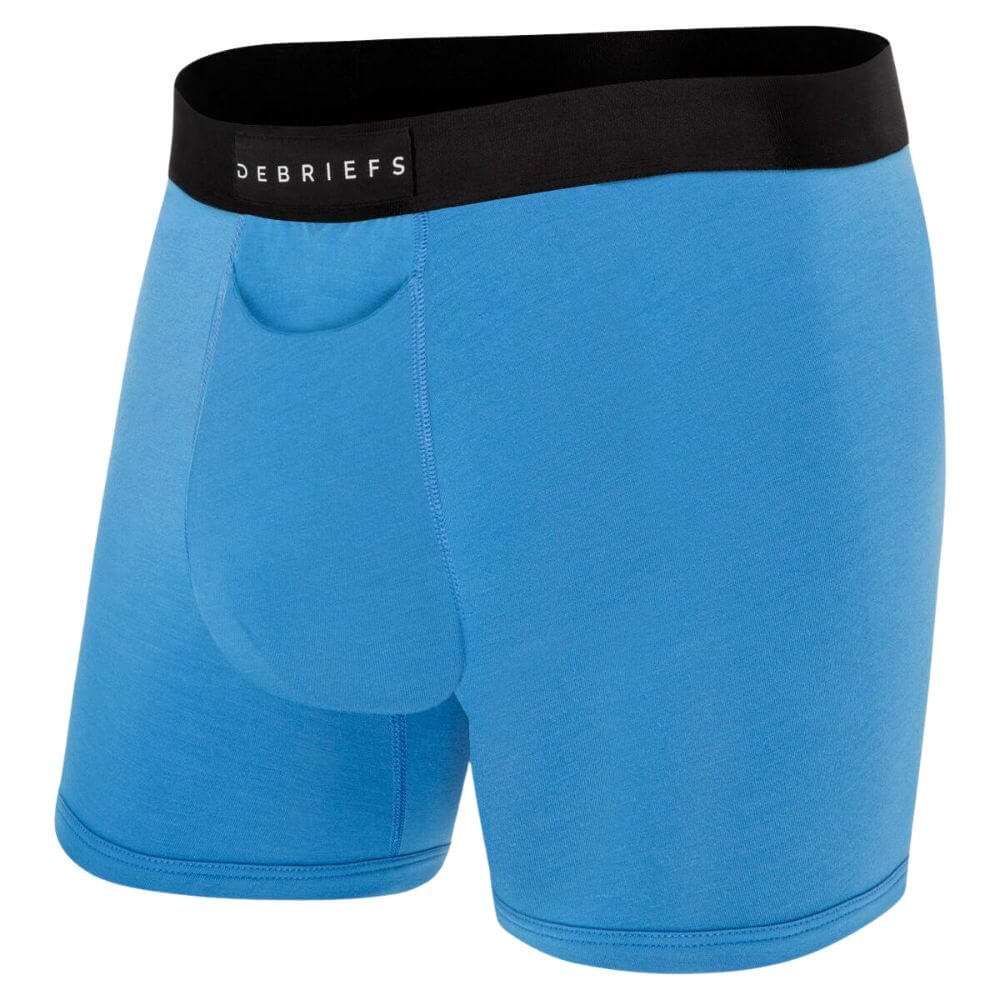
Where MicroModal earns its specific grade is in applications with prolonged skin contact and high moisture load. Underwear. Undershirts. Anything worn directly against skin across a full day. The combination of finer fibres, higher moisture absorbency than cotton, and a smooth surface makes a tangible difference in those applications. Our trunks and boxer briefs use LENZING MicroModal for the fibre grade specifically. Not because of which brand name appears on the label, but because MicroModal's 0.9 dtex is doing work that coarser fibres don't.
If you're buying a jacket lining or a T-shirt with TENCEL Modal, that fibre does its job without needing the extra fineness. But if the garment is next to your skin all day, the fibre diameter matters more than it does in wovens or outerwear.
The certification backstop is the same either way. Both TENCEL and LENZING carry genuine Lenzing provenance, with supply chains that generic modal simply doesn't have. Either name on a tag tells you something meaningful. The absence of either name tells you nothing.
Frequently Asked
- Is TENCEL the same as Lenzing?
- Lenzing is the Austrian company. TENCEL is one of their brand names. All TENCEL fibre comes from Lenzing, but not all Lenzing fibre carries the TENCEL brand. MicroModal is the most common Lenzing fibre that sits under the LENZING brand name rather than TENCEL.
- Is TENCEL the same as modal?
- No. Modal is a generic fibre category. TENCEL Modal is a specific branded fibre within that category, produced by Lenzing under a licensed and certified supply chain. Calling something "modal" is like calling something "cheese." It tells you the category, not the quality.
- Is MicroModal a TENCEL product?
- No. TENCEL and LENZING MicroModal are separate brand families within the same company. Both are made by Lenzing AG in Austria. MicroModal is the finer grade and carries the LENZING brand specifically.
- Why does Debriefs say LENZING and not TENCEL?
- Because we use MicroModal, and MicroModal has always been a LENZING-branded fibre. When Lenzing reorganised its brand portfolio in 2018 and moved most specialty textile fibres under the TENCEL name, MicroModal stayed under LENZING. The fibre didn't change. The label was always LENZING.
- Does the brand of modal matter when buying underwear?
- Yes. A branded fibre, TENCEL or LENZING, has a verifiable origin and a certified supply chain. Generic modal does not. The performance gap between LENZING MicroModal and unbranded modal is much larger than any difference between LENZING MicroModal and TENCEL Modal.
- What is the difference between TENCEL Lyocell and TENCEL Modal?
- Different fibres. TENCEL Lyocell comes from eucalyptus pulp and uses a closed-loop solvent process recovering over 99% of solvent. TENCEL Modal comes from beechwood pulp and is a different fibre chemistry with different characteristics. Both are made by Lenzing and both carry the TENCEL brand, but they are not the same fibre.